


Frontier Resolutionfor DevSecOps
Cut up to 90% of the effort DevSecOps spends supporting developers.
Developers ask DevSecOps the same questions every day: why the pipeline failed, why the scan blocked the merge, who can grant access. Agents pick up each request, investigate it in your repos, pipelines and cloud accounts, and reply with the cause and a fix ready to merge. The goal is to take up to 90% of that support load off your DevSecOps team.
payments-service deploy blocked by security gate
- Pipeline
- GitHub Actions run 4812 failed at the Trivy scan step
- Finding
- CVE-2024-45337 in golang.org/x/crypto v0.29.0
- Cause
- Base image pins an old module the service still imports
- Evidence
- Scan report, go.sum diff, image layers
- Fix
- Pull request bumping to v0.31.0. Tests pass on the branch
Resolved in 3m 40s. Waiting for developer review
[The work behind every developer request]
Developers ship faster every quarter.The DevSecOps queue grows with them.
01The manual work
Unblock
A ticket is only the start. DevSecOps still reads the pipeline log, reruns the scan, checks the policy and explains the fix.
02The agent handoff
Fix ready
Frontier agents investigate the request across code, pipeline and cloud, then prepare a pull request or an access change for review.
03Your engineers’ role
Approve
Set the guardrails once. Review the proposed change and keep your time for platform work and real security risk.
[Where CloudThinker fits]
Your stack stays.Agents work inside it.
01Developer requests
Where the queue starts
 GitHub ActionsFailed pipelines and blocked deploys
 GitLab CIMerge request pipelines
- Azure DevOpsPipelines and work items
 JenkinsLegacy build jobs
- Jira Service ManagementDevSecOps tickets
No change to your pipelines
02Security gates
Your system of record
 SonarQubeQuality and security gates
- SnykDependency and container findings
- TrivyImage scans in CI
 VaultSecrets and policies
- TerraformInfrastructure as code
Policy stays yours
03Resolution
 CloudThinker
- Read the failurePipeline log, scan report and policy
- Find the causeThe dependency, image or rule behind it
- Prepare the fixPull request or access change
- Explain itA plain answer the developer can act on
Read-only by default
04Response
Answers, not tickets
- GitHubPull request with tests passing
 SlackAnswer posted to the developer
 Microsoft TeamsApprove from the thread
- JiraTicket closed with the evidence
Changes merge on approval
[Example scenario]
Wednesday, 11:20. A release is blocked.Twelve tickets are ahead of it.
A 90-developer payments company on GitHub Actions and EKS. Three DevSecOps engineers, a security gate on every pipeline, and a queue that never empties.
- 11:20
Developer opens a ticketSignal
Jira: "payments-service deploy blocked by security gate, need this out today." Thirteenth in the queue.
- 11:20
Agent picks it upAgent
Reads GitHub Actions run 4812, the Trivy report, the go.sum file and the base image layers.
- 11:22
Cause foundAgent
CVE-2024-45337 in golang.org/x/crypto v0.29.0. The service still imports it through an old pin in the base image.
- 11:23
Fix opened as a PRAgent
Bumps the module to v0.31.0 and refreshes the base image. Tests and the Trivy scan pass on the branch.
- 11:31
Developer mergesYour team
The developer reviews a one-line change with the scan result attached, merges and redeploys.
- 11:40
Ticket closed with a lessonAgent
Deploy passes the gate. Ticket closed, and 4 other services with the same pin get the same PR.
Developer11:20
Security gate blocks payments-service again. Can someone look? Need it out today.
CloudThinker11:23
Cause: CVE-2024-45337 in golang.org/x/crypto v0.29.0, pulled in by the base image pin. PR #8812 bumps to v0.31.0. Tests and Trivy pass on the branch.
Developer11:31
Merged, redeploying.
CloudThinker11:40
Gate passed, deploy live. Same pin found in 4 more services, PRs opened. Closing this ticket.
- from ticket to live deploy
- 20 min
- DevSecOps engineers pulled in
- 0
- more services fixed before they broke
- 4
An illustrative example. Team, systems and times are representative, not a specific customer.
[Frontier resolution agents]
Every request gets an answer.Only the hard ones reach your team.
Agents work the DevSecOps queue on the same policy your team already enforces, so a developer gets an answer in minutes, and your engineers get their week back.
- Debug failed pipelines
- Build, test and deploy failures traced to the step, the change and the config that broke them.
- Fix blocked merges
- Scanner findings that block a merge turned into a pull request with the fix and passing tests.
- Handle access requests
- Access and secret requests checked against policy, then granted with least privilege and an expiry.
- Answer the repeat questions
- How do I rotate this key, why is this port closed, which image is approved. Answered from your own runbooks.
[What changes]
Same team. Same tools.Far less of the work by hand.
| Moment | Today | With frontier agents |
|---|---|---|
| Developer waits for help | Until someone on DevSecOps is free | Minutes after the ticket is filed |
| Failed pipelines | Debugged by hand from the logs | Traced to the step and change that broke it |
| Blocked merges | A Slack thread about the scanner | A pull request with the fix and passing tests |
| Access requests | Granted broadly to clear the queue | Least privilege with an expiry, every time |
| DevSecOps time | Spent answering the same questions | Spent on platform and real security risk |
[Integrations]
Connects to the rest of your stack.Read-only to start.
- GitHub
- GitLab
- GitHub Actions
- Jenkins
- Argo CD
- Terraform
- Snyk
- Semgrep
- SonarQube
- Trivy
- Checkov
- Vault
- Okta
- Jira Service Management
- Slack
[Adoption path]
One pilot.Then company-wide.
The rollout follows the four phases of the AWS Cloud Adoption Framework, so it fits the plan your cloud team already runs.
01Envision
Pick one request type
Start with failed pipelines or blocked merges, read-only. Compare the agents’ answers with what your team would have sent.
02Align
Agree the guardrails
Decide which fixes agents may open as pull requests, which access they may grant, and who approves.
03Launch
Open it to every team
Route each team’s DevSecOps requests through agents on the same policies and audit trail.
04Scale
Make it the front door
New repos and pipelines launch with agent support on. Every resolved request feeds your runbooks.
[Customer proof]
FPT Cloud.Results on the record.
FPT Cloud put CloudThinker AI Code Review on live merge requests and caught the defects observable in the code, security findings included, before human review or QC.
- precision on production merge requests
- ~97%
- backend logic coverage
- Full
[AWS guidance]
Built the way AWS says to run it.Reviews start from a known reference.
- Well-Architected DevOps GuidanceDevelopment lifecycle, quality assurance and automated governance practices from AWS.
- AWS Security Reference ArchitectureHow security services and guardrails fit a multi-account AWS setup.
- Security controls by CAF capabilityRecommended controls for identity, infrastructure protection and threat detection.
[Trust and control]
Agents do the work.Your team keeps control.
- You approve every change
- Agents propose. Nothing touches production until someone on your team says yes, and you set that rule per system.
- Every action on the record
- Each step is logged, attributed and reversible, ready for your auditors.
- Certified for enterprise
- SOC 2 Type II and ISO 42001, with reports in our trust center.
- Runs where you need it
- In our cloud, through AWS Marketplace, or inside your own account.
[Questions]
What teams askbefore they start.
- Is the 90% reduction guaranteed?
- No. Up to 90% is the target we design for, based on how much DevSecOps time goes to repeat requests. We measure your baseline in the pilot so you can see the real number for your team.
- What access does it need?
- Read-only access to the repos, pipelines, scanners and cloud accounts you choose. Write access, such as opening pull requests, is added per action and can be revoked at any time.
- Can agents merge or grant access on their own?
- Only where your policy allows it. Most teams start with agents proposing pull requests and access changes, then let them handle low-risk ones once the results have earned trust.
- Where do developers ask for help?
- Where they already do: Jira Service Management, ServiceNow, Slack or a comment on the pull request. Agents reply in the same thread.
[Go deeper]
Related reading.Pick the next queue.
Give every developer an answer in minutes.Give DevSecOps their week back.
Start with one request type, read-only. Measure how much of the queue agents resolve before you grant a single permission more.

Up to $200K in AWS credits
Applied to your own AWS account.
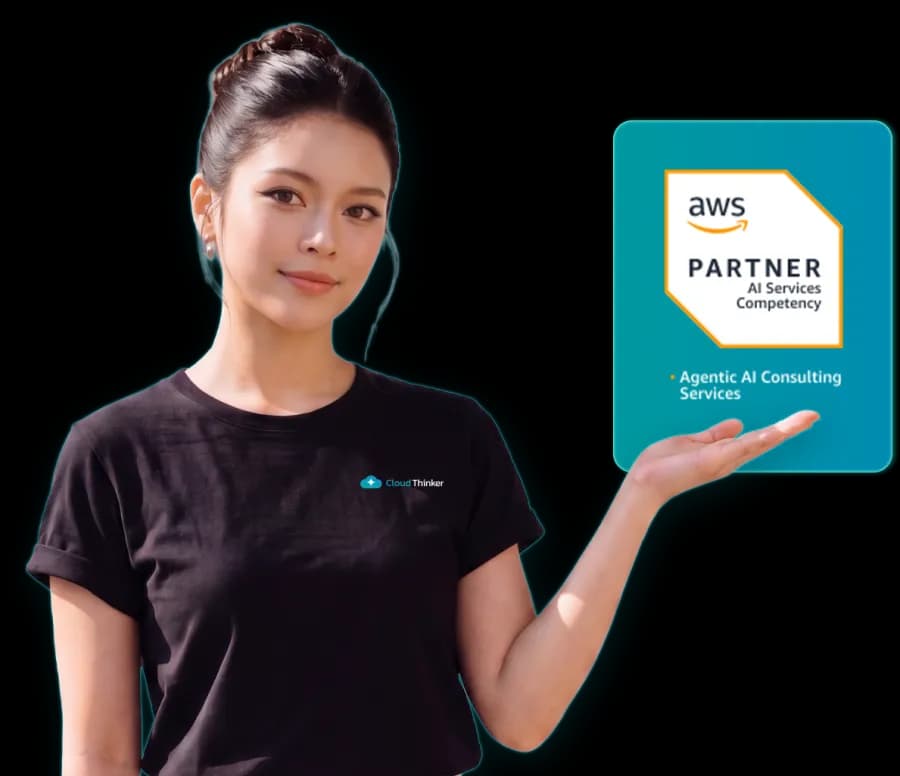
AWS AI Services Competency
Validated for Agentic AI Consulting.
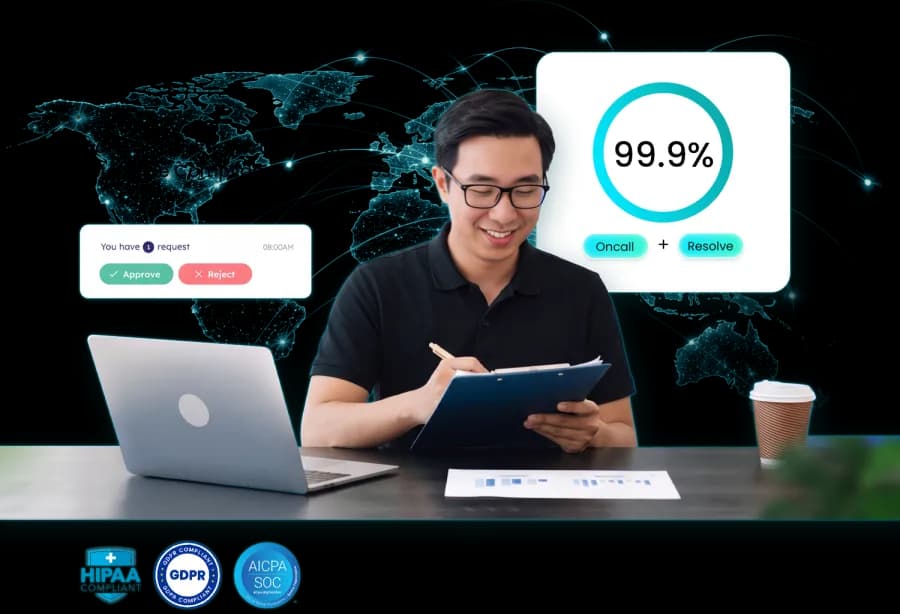
Covered 24/7, on your approval
Under HIPAA, GDPR and SOC 2 controls.