AI writes the code. Who runs it in production?
AI-DLC turns months of building into days. CloudThinker is the operations layer that reviews, secures, and runs everything your coding agents ship.
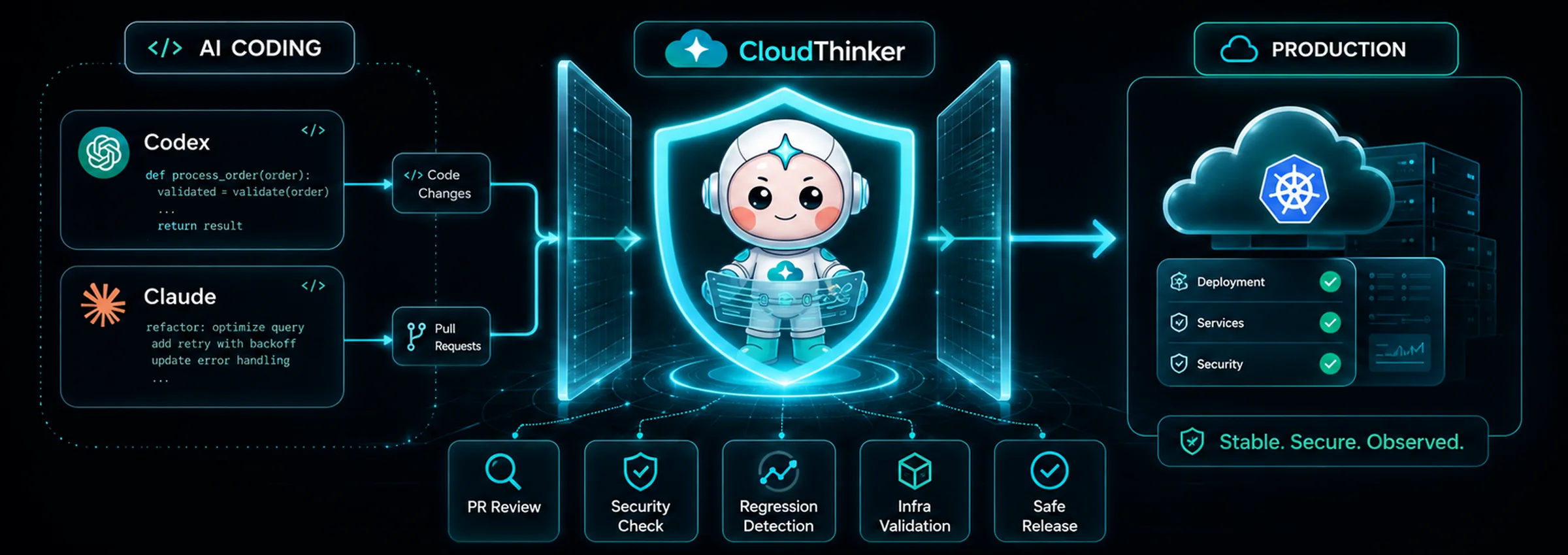
Construction got fast. The bottleneck moved to operations.
AI-DLC solved intent-to-code. Everything after the diff — review, security, cost, incidents — still runs at human speed.
A bolt lands in hours. Every diff still needs security, performance, and architecture review.
AI-assisted code leaks secrets at twice the human rate. An annual pentest can't keep up.
Coding agents have deleted live databases. Production autonomy demands scoped credentials, sandboxes, and audit.
At AI speed, every team faces the same three options.
Gate every bolt on human-speed review. You give back the 10–15× you adopted AI for.
Ship AI code unreviewed — while attackers accelerate with AI too. You become the next incident.
Specialist agents on review, security, cost, and incidents — under your policy, with full audit. The only option that scales.
AI-DLC has three phases. Most teams only tooled two.
Mob elaboration: humans and AI turn business intent into requirements, stories, and units of work.
Kiro
Bolts of hours, not sprints of weeks: AI generates code and tests, humans validate every step.
intent-to-diff, at 10–15× velocity
The coding agent produces the diff. CloudThinker's agents review it, pentest it, gate the release, watch the spend, and take the pager.
Specialist agents for the operations half of AI-DLC
Not generic AIOps wrappers — agents shaped to the work that follows every AI-generated release.
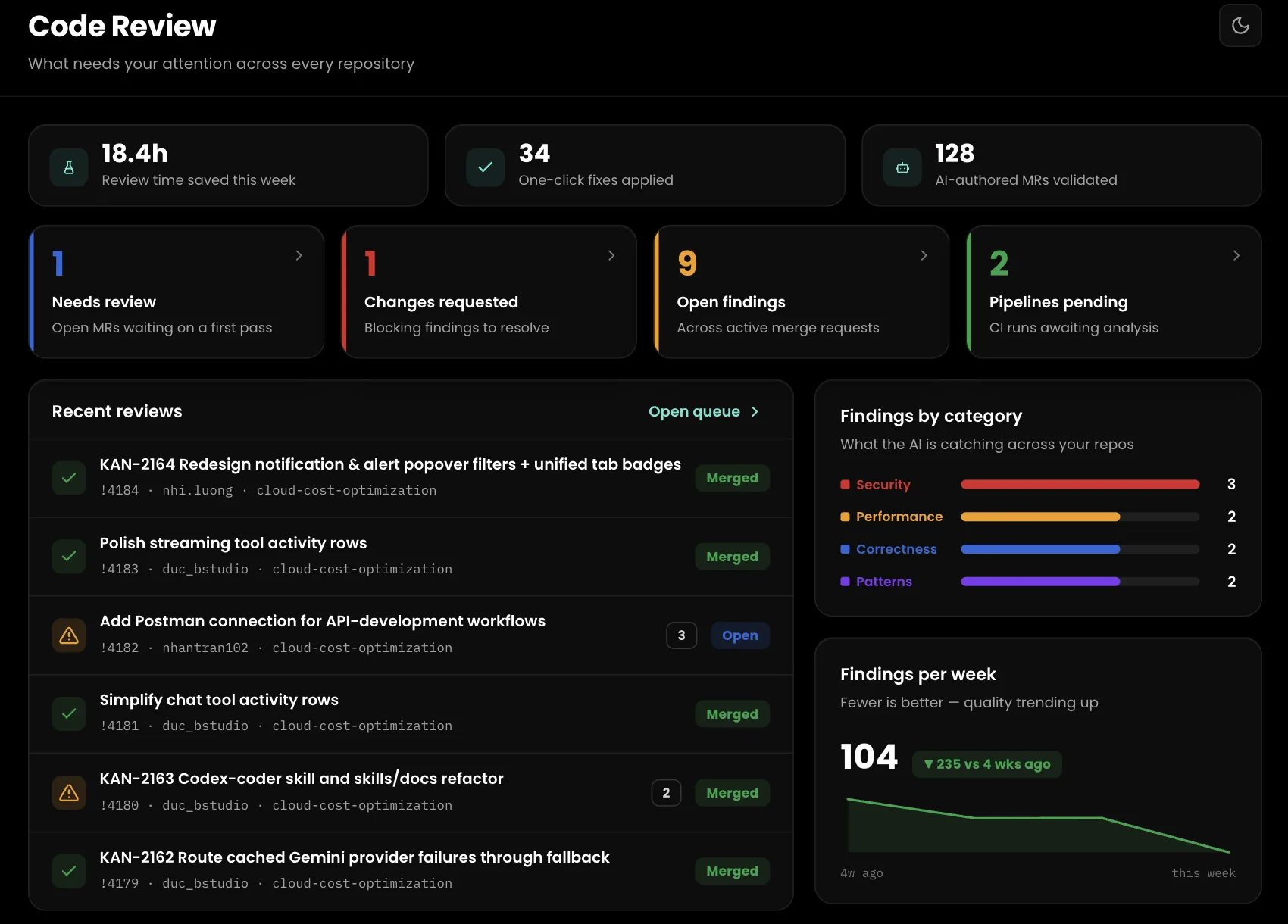
Code Review
Every AI-authored MR, validated before merge
Security, performance, correctness, and pattern findings on every merge request — with one-click fixes. 128 AI-authored MRs validated in one week.
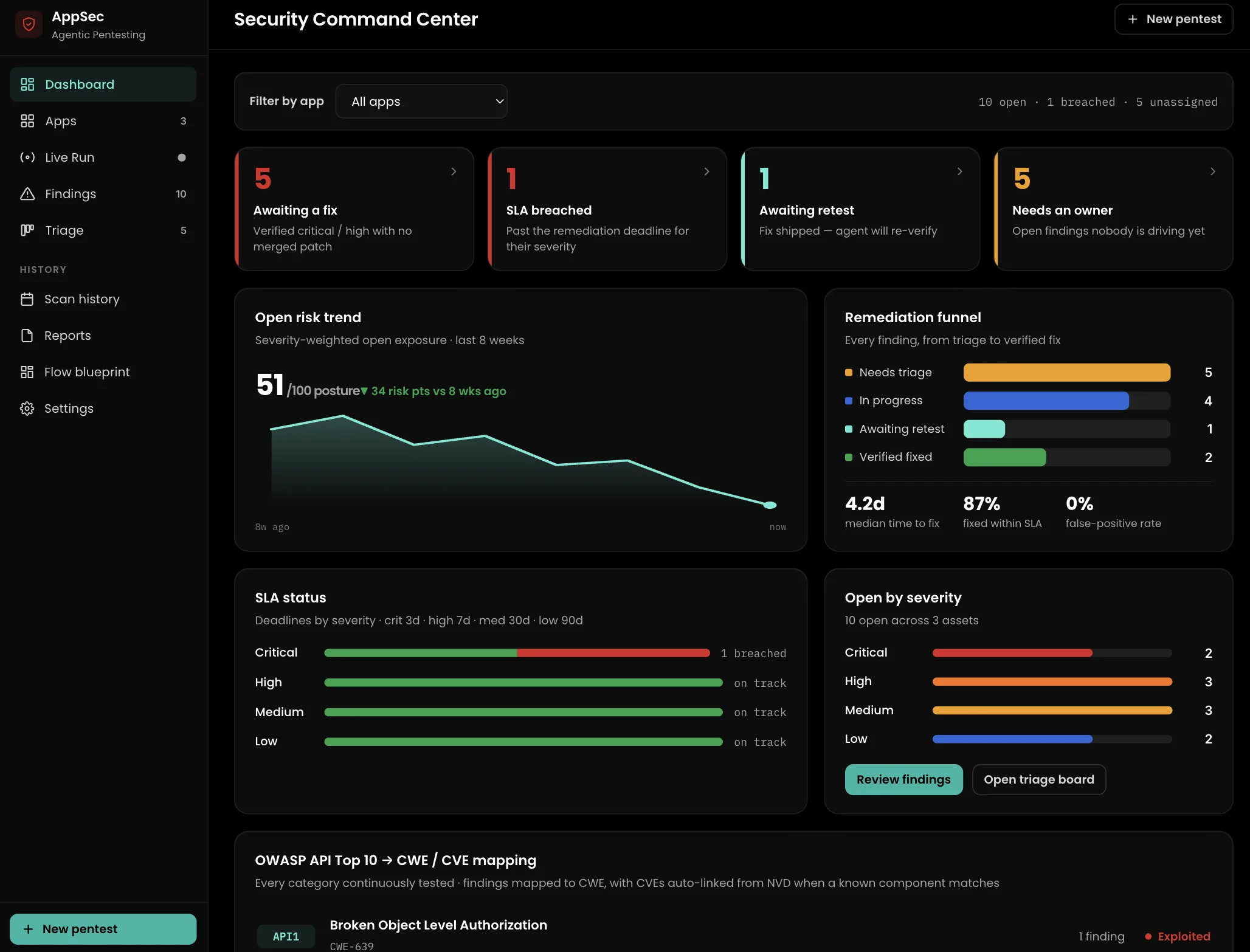
Cyber
Ship a bolt, get a pentest
Every release is tracked as attack surface: risk trend, SLA clocks, and a remediation funnel from triage to verified fix — 0% false positives.
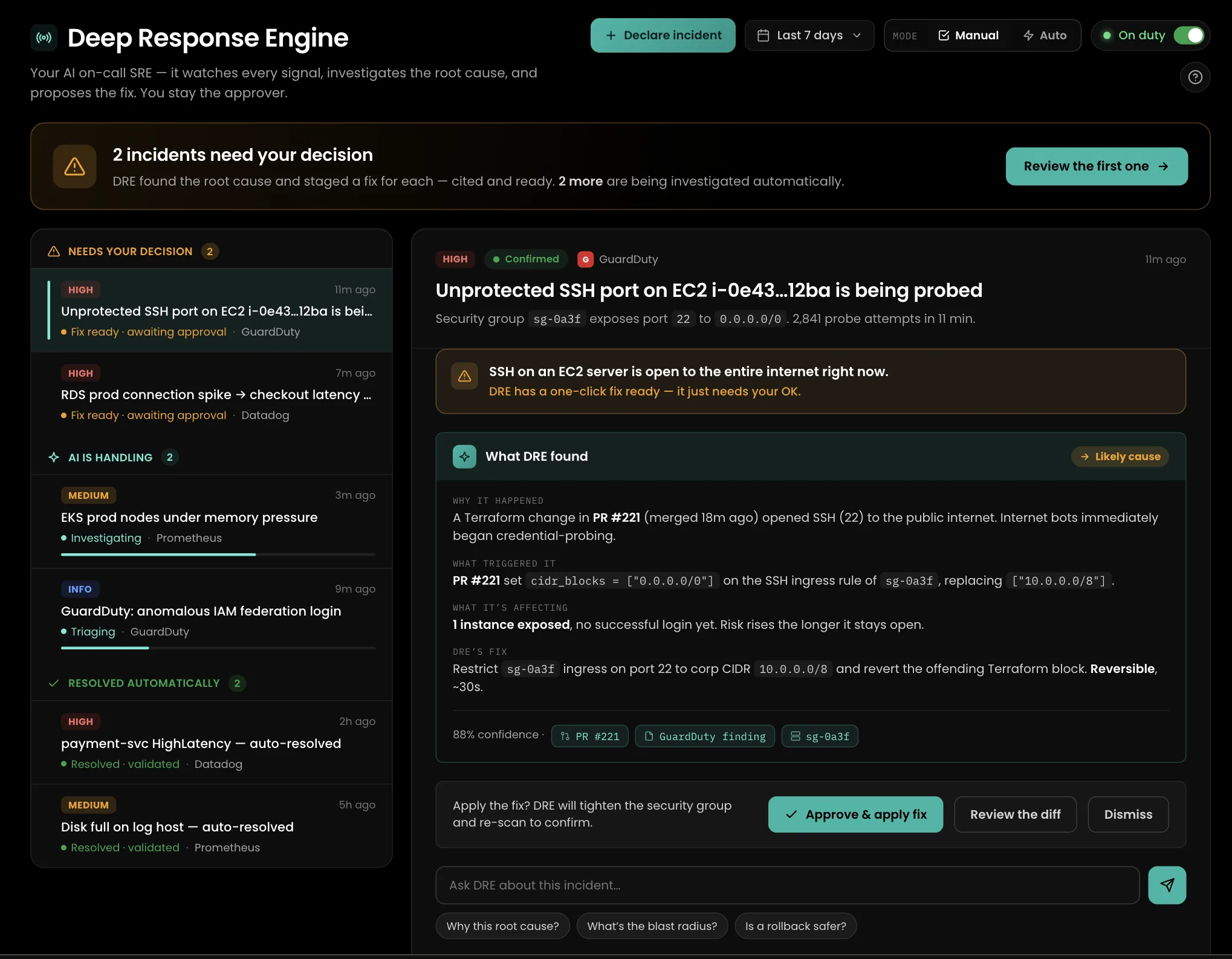
Resolve
Root cause found, fix staged — you approve
Resolve investigates before you arrive: what happened, which PR caused it, and a reversible fix with cited evidence. You just approve.
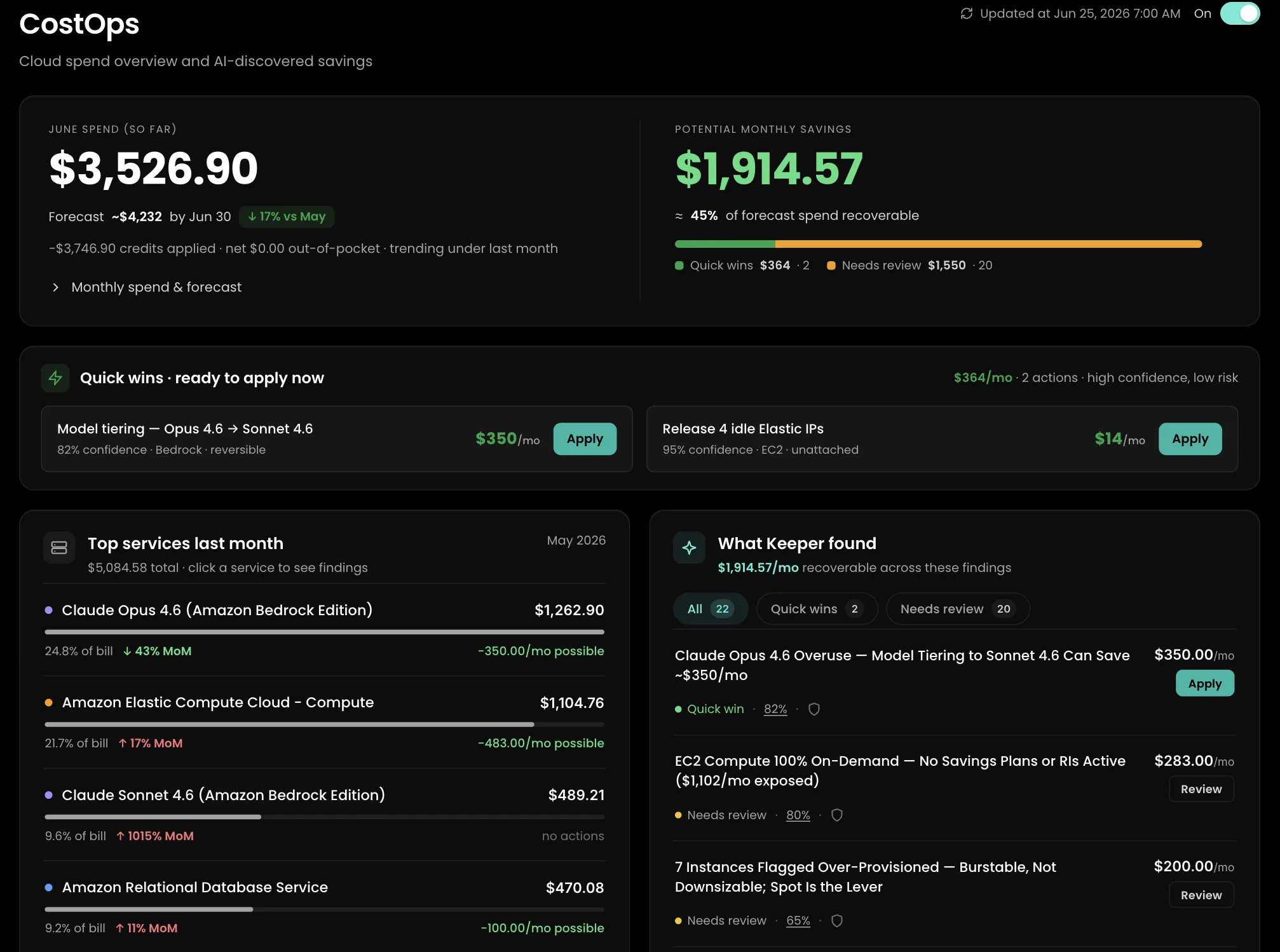
CostOps
AI velocity, with the bill under control
CostOps finds recoverable spend — including the LLM bill — and applies fixes like model tiering with one click.
Velocity you can defend to an auditor
AI-DLC's rule is AI executes, humans oversee. CloudThinker applies it to production: agents act inside guardrails you define, and every action is attributable.
Start recommend-only. Expand autonomy as trust builds.
Read-only → approve-to-act → autonomous, per agent and per environment.
Sensitive operations wait for a named human; change windows are enforced.
Brokered identity, scoped credentials, sensitive data tokenized at the boundary.
Who asked, what ran, who approved — SOC 2 Type II, BYOK available.
Your first 30 days
No architecture changes, no migration project. Agents start read-only and earn autonomy as you build trust.
Connect read-only. Agents map your infrastructure and surface the first verified findings — before your next sprint review.
Approve the low-risk, high-confidence actions. Most teams recover 15–25% of cloud spend in this pass alone.
Releases review and pentest themselves, routine incidents auto-resolve — your team works on the next bolt, not the pager.
Complete your AI-DLC.
Velocity isn't optional — and neither is operating it. Connect read-only and see verified findings within 48 hours.
- No architecture changes required
- Starts read-only
- SOC 2 Type II